Maintenance of concrete surfaces and structures requires powerful solutions to combat corrosion, failed or aged coatings, heavy contamination, and exposed substrate. Traditional methods like pressure washing or sandblasting often fall short when projects demand speed, precision, and environmental compliance. Ultra High-Pressure (“UHP”) hydroblasting has emerged as the superior, and preferred, choice for tackling these difficult surface preparation challenges.
UHP hydroblasting technology utilizes water at extreme pressures to strip away unwanted materials to leave a clean, bondable surface without damaging the substrate. Industries ranging from marine to aerospace now rely on this versatile method for their critical surface preparation cleaning needs. We will explore how UHP blasting works and why it is so versatile compared to other technology and older techniques.
What Is UHP Hydroblasting (“Ultra High-Pressure Hydroblasting”)?
UHP blasting is an industrial cleaning technique that uses water pressurized above 25,000 pounds per square inch (“PSI”) (above 1,700) [1] to remove rust, tough coatings (including elastomers), and other contamination. Pumps intensify water pressure to levels capable of cutting through steel or stripping tough industrial coatings. This process relies entirely on the kinetic energy of water droplets striking a surface at supersonic speeds.
The sheer force of the water creates a shearing action that lifts contaminants directly from the surface. Rust, scale, paint, and chemical residues detach immediately upon impact. This method leaves the underlying material clean and ready for inspection or recoating without necessarily creating a new surface profile on the substrate, though the existing profile is often exposed and deep-cleaned.[2]
Unlike standard pressure washing or abrasive grit blasting (e.g., sandblasting), UHP hydroblasting achieves an unmatched level of cleanliness of the existing substrate and can be used to create a new surface profile.. The water penetrates to flush out invisible salts and chlorides and completely remove coatings, grouts, and old concrete.
UHP Hydroblasting Methods
The method of UHP hydroblasting is often defined as the use of a jet (or multiple) of ultra-high pressure (25,000+ PSI) water to strip coatings, rust, and contaminants from surfaces; but this definition does not address how water that you can access from a spigot can become an effective tool for coating removal.
The methodology to perform UHP hydroblasting is far more complex than the definition; it requires operators to understand how water – and how much of it – has to be pushed through specialized pumps, hoses, tools, nozzles, and jewels to address the needs of the project. Operators use factors like on the project’s scale and accessibility, the type of material being removed, the type of surface profile required, and the condition of the substrate to determine what is needed to the perform UHP hydroblasting for the specific project.
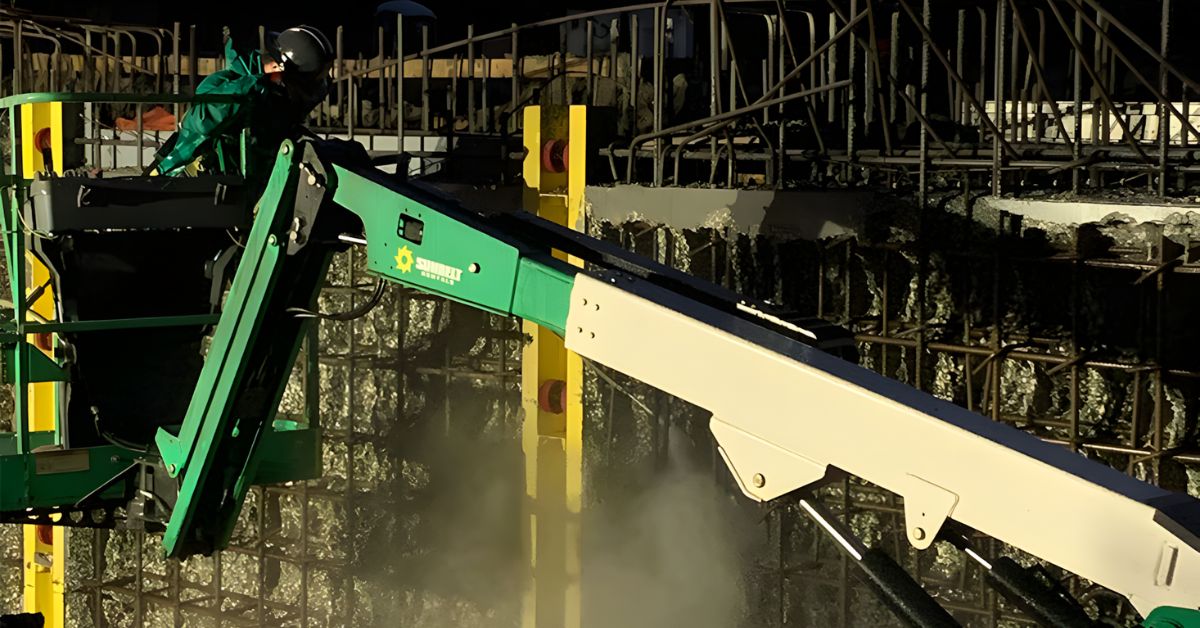
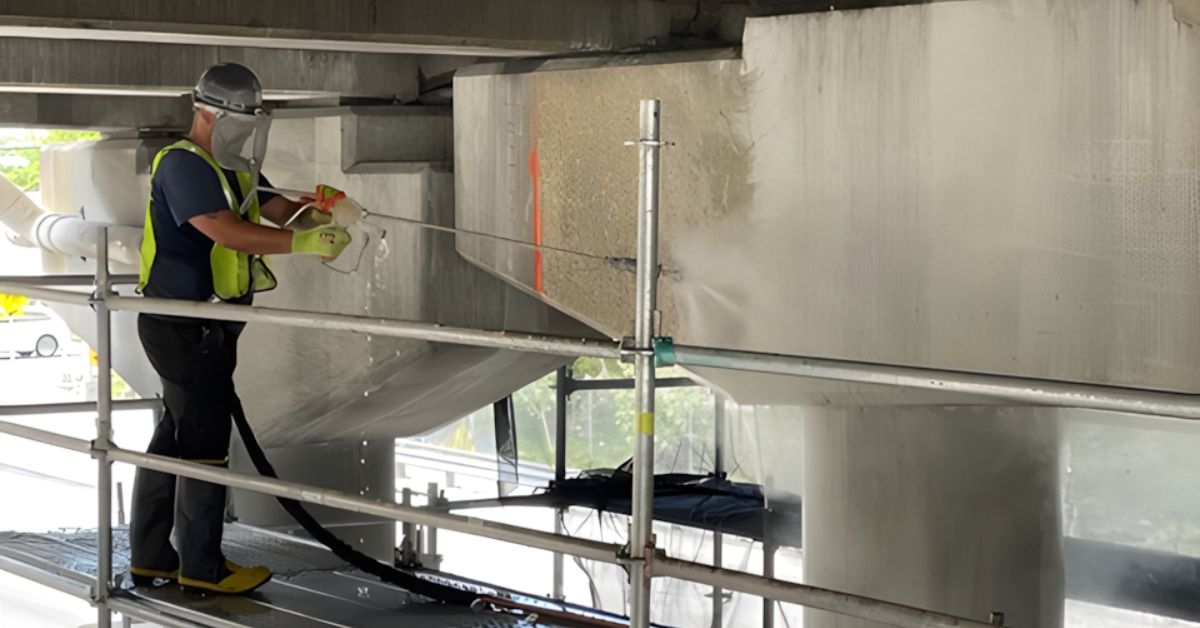
Handheld tools, like specialized lances and guns, and walk-behind deck machines, are common means for removal of materials from all types of surfaces from intricate, hard-to-reach areas to large decks and exterior walls. These tools use specific tips and heads, including spinning heads with multiple jets, with nozzles that direct the high-velocity stream with pinpoint accuracy.
This manual approach is tested and proven to be highly effective for performing surface preparation on small or large surfaces, no matter the height or width. It can be used with vacuum recovery to reduce runoff and by-product.. It also allows the operator to adjust their angle and distance for optimal results on complex geometries.
Remote-controlled robotic arms provide another layer of versatility for hazardous environments. Operators control these units from a safe distance while the robot climbs vertical walls or enters confined spaces. This method keeps personnel away from the blast zone and significantly reduces the risk of injuries on site.
Safety protocols strictly govern these methods due to the extreme pressures involved. You can be sure that the proper method, means, and safety protorcols are in addressed by hiring a skilled hydroblasting technician.
UHP Hydroblasting Applications Across Industries
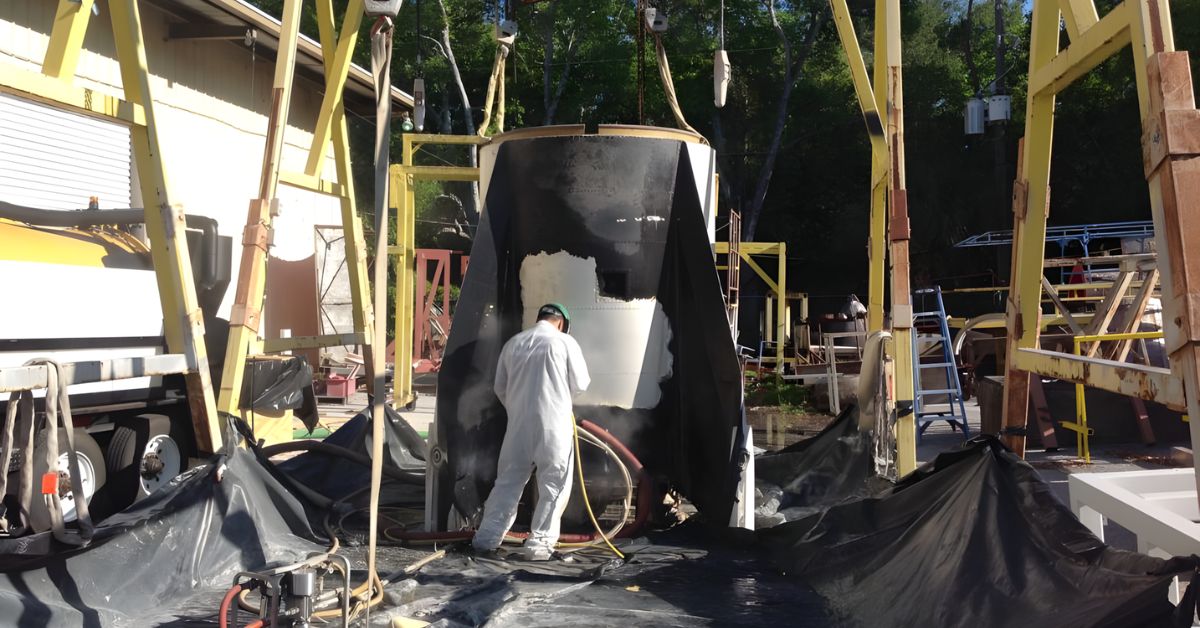
In the chemical sector, storage tank maintenance relies heavily on water jetting technology. Tanks accumulate sludge, scale, and chemical deposits that compromise their integrity over time. UHP cleaning removes these hazards safely without introducing heat or sparks.
This spark-free characteristic makes waterblasting essential for turnaround projects in water-treatment plants, lift stations, refineries, and gas plants. UHP hydroblasting is used to clean heat exchangers and tube bundles to restore their thermal efficiency; the high-pressure water clears blockages inside the tubes that chemical cleaning often misses.
The aviation industry benefits from UHP hydroblasting for runway maintenance and rubber removal. Aircraft tires leave heavy rubber deposits on landing strips that reduce friction and compromise safety. Waterblasting removes this rubber build-up without damaging the concrete or asphalt grooves.
Civil engineering projects utilize hydroblasting for concrete preparation and repair. The water jet can remove deteriorated concrete while leaving sound concrete and rebar intact. This selective removal creates an excellent bonding surface for new concrete patches and overlays.
Benefits and Versatility of UHP Hydroblasting Over Traditional Methods
UHP hydroblasting offers significant advantages over abrasive grit blasting regarding waste generation. Grit blasting produces massive amounts of spent media that requires containment, collection, and disposal; there is also the added risk created by dust inhalation. Water blasting generates only the stripped coating debris and water, which can be recovered through a vacuum, significantly reducing disposal and containment costs.
The absence of abrasive media also prevents grit entrapment in the substrate. Grit particles often embed themselves in softer metals or composites during dry blasting. Waterjetting leaves a chemically clean surface free of foreign particles that could cause premature coating failure.
Reduction of Contaminants
Another key benefit involves the reduction of invisible contaminants like soluble salts. Abrasive blasting often traps these salts under the surface profile, leading to rapid rust bloom. UHP waterblasting flushes these salts out of the micropores, extending the lifespan of the new coating system.
Project timelines often improve because UHP hydroblasting allows other trades to work nearby. Grit blasting creates large dust clouds that force other workers to evacuate the area. Waterblasting creates no dust, allowing other trades to continue their tasks in the same vicinity.
The versatility of equipment allows skilled hydroblasting technicians to switch between different pressure ratings and nozzle tips easily. A single hydroblasting unit can handle gentle coating removal to a removal of concrete depending on the rate of flow, PSI, and tools. This adaptability makes UHP hydroblasting units valuable assets for diverse contracting requirements.
Considerations For Safety and Environmental Impact
Environmental compliance drives many companies to adopt UHP hydroblasting over chemical or abrasive methods. The process uses pure water and eliminates the need for harsh chemical strippers. This reduction in hazardous chemicals protects the local soil and groundwater from contamination.
The technology also suppresses airborne dust effectively during the coating removal process. Removing lead-based paint or asbestos-containing coatings with dry blasting creates dangerous airborne particulates. Water captures these hazardous materials at the source and prevents them from drifting into the surrounding community.
Modern UHP hydroblasting systems often include vacuum recovery attachments that capture water and debris instantly. This closed-loop capability prevents runoff from entering storm drains or waterways. The collected water can often be filtered and recycled, further minimizing the environmental footprint.
Safety innovations protect operators from the physical hazards of high-pressure water. Tumble boxes and whip checks prevent hoses from flailing if a coupling fails. Personal protective equipment for UHP hydroblasting includes specialized suits made from cut-resistant materials.
Clean Sweep Hydroblasting for Ultra High-pressure Hydroblasting Services
Clean Sweep Hydroblasting leads the industry in precise UHP solutions. We understand the critical nature of surface preparation for long-term asset protection and invest in the latest pump technology and robotic systems for efficient project execution.
Experience the difference professional ultra high-pressure hydroblasting expertise makes. We handle everything from routine tank cleaning to large-scale demolition projects. Let us demonstrate the power and precision of our water blasting capabilities.
Enhancing Industrial Efficiency
UHP blasting represents a significant leap forward in industrial cleaning and surface preparation technology. It combines raw power with precision to solve maintenance problems that traditional methods cannot touch. The versatility of ultra high-pressure waterblasting across different sectors proves its value daily.
Asset owners no longer have to choose between speed, quality, and environmental responsibility. Ultra high-pressure waterblasting delivers simultaneously on all three fronts. It provides a superior surface for coatings while protecting workers and the planet.
Embracing this technology ensures your equipment and infrastructure last longer and perform better. The reduction in waste and downtime translates directly to your bottom line. Visit Clean Sweep Hydroblasting to learn more about this versatile method today.
- Water Jetting Association, “WJA Issues Clear Guidance on Water Jetting Pressures,” Water Jetting Association, 28 Jan. 2022, https://waterjetting.org.uk/wja-issues-clear-guidance-on-water-jetting-pressures/. Accessed 30 Dec. 2025. ↑
- Supra. ↑