
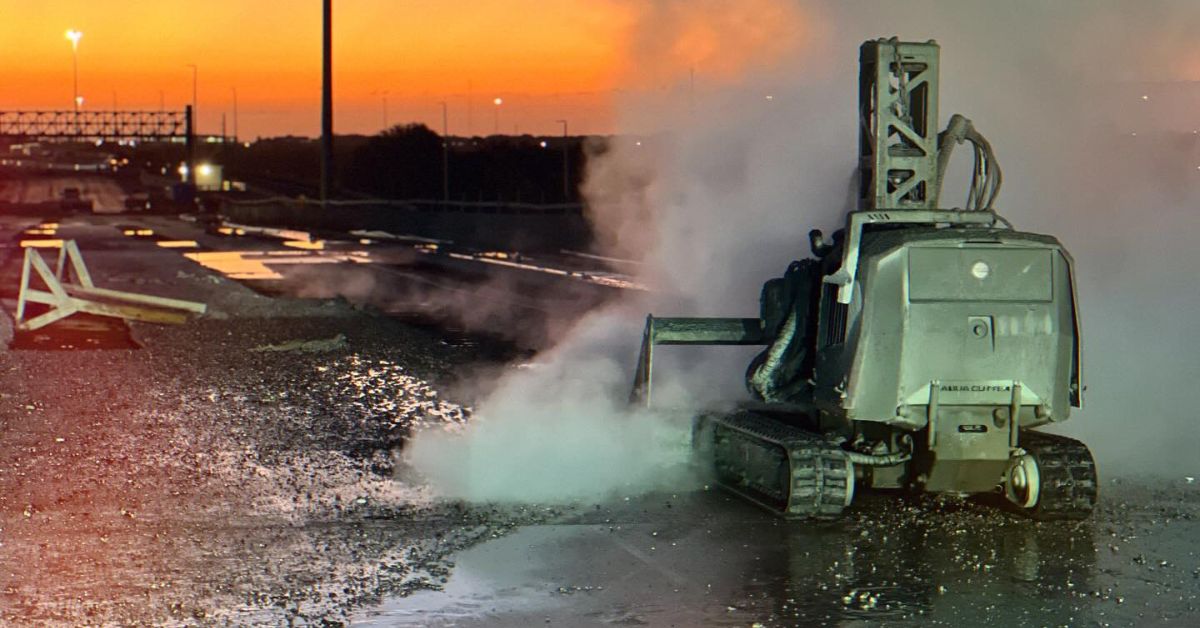
Concrete removal is a common step in many construction and renovation projects; contractors and engineers must choose how to remove old or damaged concrete effectively while preserving the structural integrity of the remaining material. .
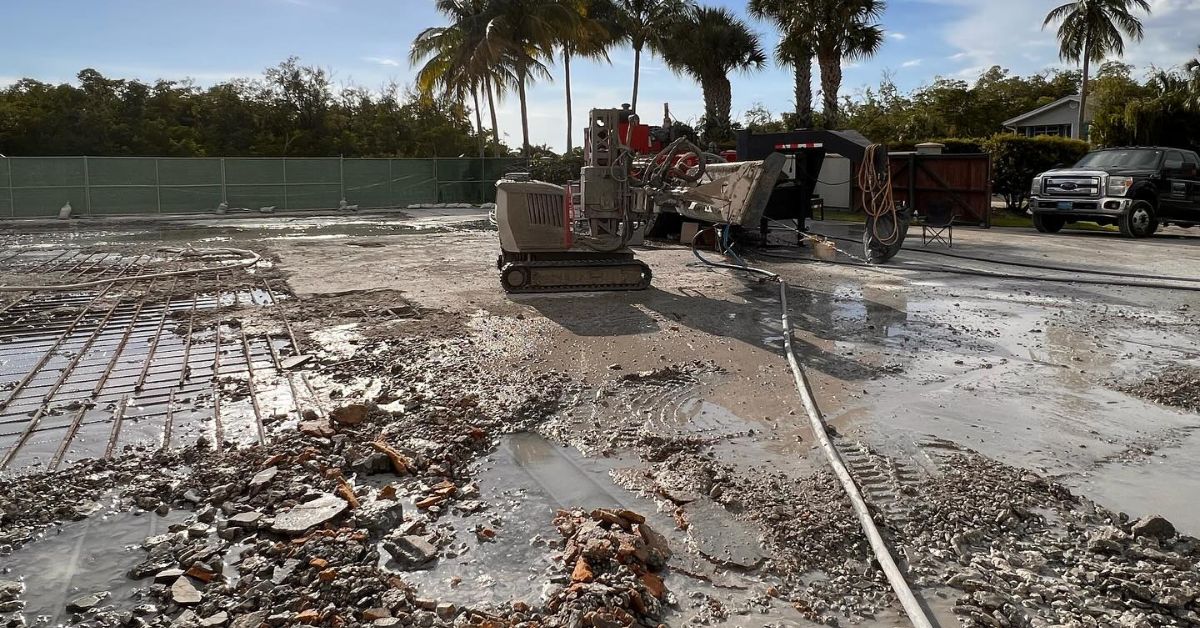
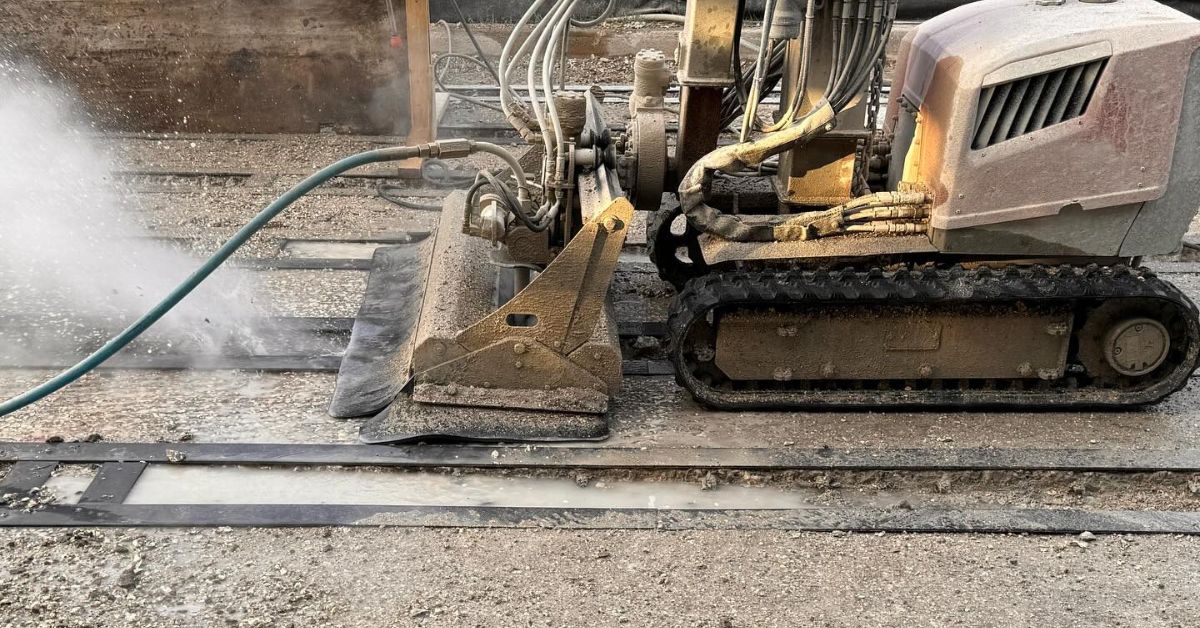
Hydrodemolition allows for the removal without the damage to the structural steel.
Traditional concrete removal relies on mechanical force using tools like jackhammers and breakers to physically strike the concrete. These traditional methods damage the structural steel, which often requires it be removed, and cause reverberation creating pockets around the remaining steel and rebar which can impact the structure’s long term integrity.
In contrast, hydrodemolition utilizes high-pressure water to blast away the concrete material without damaging the existing structural steel or causing reverberation; hydrodemolition allows for precision and structural safety. The choice between these methods significantly impacts the timeline, cost, and environmental footprint of a project.
Hydrodemolition Explained
Hydrodemolition utilizes water flowing from rates of 10 to 85 gallons a minute into the machine’s pumps to generate water pressures from 15,000 to 40,000 pounds per square inch (“PSI”) which are directed onto the surface via robotic units or hand-held guns. The water penetrates the porous concrete, creating internal pressure that exceeds the material’s tensile strength, causing it to break apart in a controlled manner.
Key Benefits
- Precision and Selectivity: Operators can program robotic units to remove concrete to a precise, predetermined depth. This high level of control ensures that only the deteriorated or damaged material is taken away, leaving the sound concrete intact. This surgical approach minimizes waste and prepares the surface perfectly for repair.
- Rebar Preservation and Bonding: The high-pressure water stream cleans and descales any existing reinforcing steel (rebar) without causing the damage, micro-fractures, or bending associated with mechanical methods. This leaves a clean, textured surface that provides an excellent bond for the new concrete, enhancing the durability of the repair.
- Vibration Reduction and Structural Integrity: Unlike jackhammers and other impact tools, hydrodemolition is a vibration-free process. This is critical for maintaining the structural integrity of the remaining concrete, as it eliminates the risk of micro-cracking that weakens the structure over time. This makes it the ideal method for sensitive or historic structures like bridges, dams, and parking garages.
- Enhanced Environmental and Worker Safety: Hydrodemolition eliminates the creation of airborne silica dust, a significant health hazard for workers. The water used in the process effectively captures the dust and debris. Moreover, services can collect, treat, and recycle this water on-site, reducing the overall environmental impact of the project.
Considerations
The initial setup cost is generally higher, requiring specialized equipment and trained operators. Water management is also a logistical factor, as contractors must collect and treat wastewater to meet environmental regulations. Specialized providers like Clean Sweep Hydroblasting allow contractors to leverage this technology without the capital expenditure of purchasing their own fleet.
 Traditional Concrete Removal Explained
 Traditional Concrete Removal Explained
Traditional removal is the most common method, involving percussive tools like pneumatic breakers, jackhammers, and hydraulic hoe rams. These tools deliver rapid, high-impact blows to fracture the concrete surface.
Key Benefits
- Lower Initial Cost: Equipment is standard on most sites and available for rent or purchase at a lower cost.
- Accessibility: Most crews are familiar with these tools, eliminating the need for specialized training.
- Availability: Parts and replacement units are ubiquitous, which is vital for projects in remote locations.
Significant Drawbacks
The repeated impact causes vibrations that travel through the rebar, leading to micro-cracking. This compromises the bond between rebar and concrete, potentially shortening the lifespan of the repair and causing unforeseen damages in the remaining structure. The damages to the existing rebar and other structural elements often requires they be cut or replaced entirely, removed, and scrapped.
Additionally, breaking concrete releases large amounts of silica dust, posing respiratory risks and requiring extensive containment systems. The process is also labor-intensive and creates high noise levels that can be disruptive in urban environments.
Comparing Key Factors
Choosing the most effective method requires weighing several critical factors to ensure the best outcome for your project:
- Precision and Quality: Hydrodemolition provides a high level of control, allowing for selective removal that results in a rough, irregular surface profile. This texture is ideal for achieving a strong mechanical bond with new concrete. In contrast, traditional mechanical methods are less precise and often leave a smoother surface that may require extra preparation, such as sandblasting, to ensure proper adhesion. Hydrodemolition also allows for the existing structural steels to remain, as needed, and prevents the issues of reverberation in the structure.
- Productivity and Speed: While traditional methods typically have shorter setup time, hydrodemolition’s setup is usually faster even with requiring a unique water management. Traditional methods require massive amounts of manpower and equipment which slows productivity and speed. Hydrodemolition is significantly faster once the equipment is operational; single robotic unit can outperform a team of jackhammer operators, and can run with vacuum trucks to pull the material as the robot is running which can lead to substantial time savings, particularly on large-scale infrastructure projects.
- Worker Safety: Hydrodemolition significantly reduces common job site hazards by protecting workers from the dangers of silica dust inhalation and hand-arm vibration syndrome (HAVS).
- Noise Levels and Impact: Traditional tools generate loud, percussive banging that can be highly disruptive. Hydrodemolition produces a constant rushing sound that, while still requiring hearing protection, is often less intrusive. Hydrodemolition is also less invasive to the structural integrity of occupied buildings and produces fewer vibrations associated with traditional demolition.
Best Use Cases for Each Method
 Best Use Cases for Each Method
Traditional Removal
Traditional remains the best choice for complete demolition where structural preservation is not a concern. The brute force of hydraulic breakers is efficient for leveling entire structures or performing small, patchy repairs in non-critical areas.
Hydrodemolition
But hydrodemolition excels in scenarios requiring precision, safety, selective removal, and structural preservation:
- Bridge Deck Rehabilitation: It removes delaminated concrete from around rebar without damaging the steel or the bridge structure.
- Bridge Expansion: It allows for the roughening of the existing concrete without damaging the steel or the bridge structure.
- Parking Garages: These vibration-sensitive structures benefit from repairs that don’t compromise the load-bearing capacity of surrounding slabs.
- Vertical and Overhead Work: Robotic units can be mounted to work on walls, pillars, and bridge undersides, reducing the physical strain and danger to workers on scaffolding.
Making the Right Choice
The decision between traditional concrete removal versus hydrodemolition requires a careful assessment of project scope, budget, and structural requirements. Traditional methods offer familiarity and low entry costs for simple demolition tasks. However, for structural repairs, hydrodemolition’s ability to remove concrete selectively without causing micro-cracking results in more durable, longer-lasting results.
Safety regulations are also pushing the industry toward hydrodemolition to protect the structures’ integrity and the workforce from dust and vibration. Partnering with experienced professionals like Clean Sweep Hydroblasting ensures that the technical benefits of hydro cutting concrete are fully realized. By choosing the method that aligns with the logistical and structural needs of the site, contractors ensure a safe, high-quality result.