Commercial waterblasting is a key part of maintenance of industrial facilities and structures. This process uses high-pressure water to clean surfaces and remove unwanted materials. Industries rely on this powerful technique to maintain the integrity of their infrastructure and equipment.
Preventive care ensures machinery operates efficiently and structures remain safe. Neglecting maintenance leads to costly repairs and downtime. Waterblasting serves as a proactive measure to address these issues before they escalate.
Many facilities, governments, contractors, and property managers have adopted waterblasting as an essential component for operational success. Keep reading to learn more about the role commercial water blasting plays in preventative care for industrial equipment.
Understanding the Technology
Waterblasting technology uses kinetic energy. A pump pressurizes water and forces it through a focused nozzle at high velocities. This concentrated stream hits the target surface and dislodges stubborn contaminants. Operators adjust pressure levels, nozzles, and methods for each task. Understanding the different levels ensures the safety of the substrate being cleaned.
Differentiating Pressure Levels
Low-pressure cleaning (below 4,000 PSI), like pressure cleaning, effectively removes loose dirt, mold, and mildew from delicate surfaces. It’s ideal for general cleaning where the material requires gentle handling.
High-pressure waterblasting (5,000 to 24,000 PSI) handles tougher jobs like removing grime, loose paint, and marine growth. It is the standard for most industrial cleaning applications. It is also used in hydrodemolition to remove old, damaged, and/or “bad” concrete from structures without causing any reverberation to the rebar.
Ultra-high pressure (UHP) blasting (above 25,000 PSI) has immense force that can be used for a multitude of applications; from stripping tough coatings off stucco to cut through concrete to allow for structural repairs to buildings and bridges – all without damaging the structural steel. UHP is often used for surface preparation and resurfacing of stucco and concrete by removing coatings like polymers and elastomeric paints to leave a bondable surface and for concrete mitigation by using hydrodemolition to remove unstable concrete.
Equipment and Safety Measures
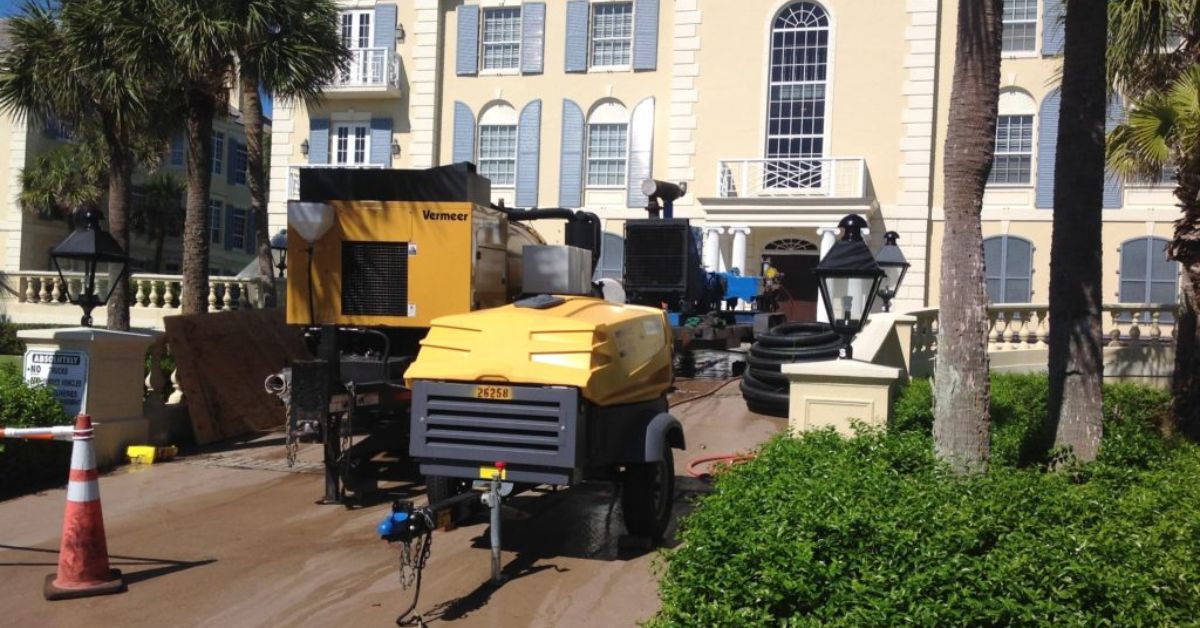
The equipment includes high-performance pumps, specialized robots, durable hoses, specialized lances, rotating heads, and specific nozzles to control the spray pattern and intensity. This customization allows for precision surface preparation and cutting in hard-to-reach areas.
Safety is the top priority. The high-velocity water stream can cause severe injuries. Operators must have rigorous training to handle the equipment correctly. Personal protective equipment (PPE), including heavy-duty suits, face shields, and metatarsal guards, is mandatory to prevent accidents.
 Preventive Care Applications
 Preventive Care Applications
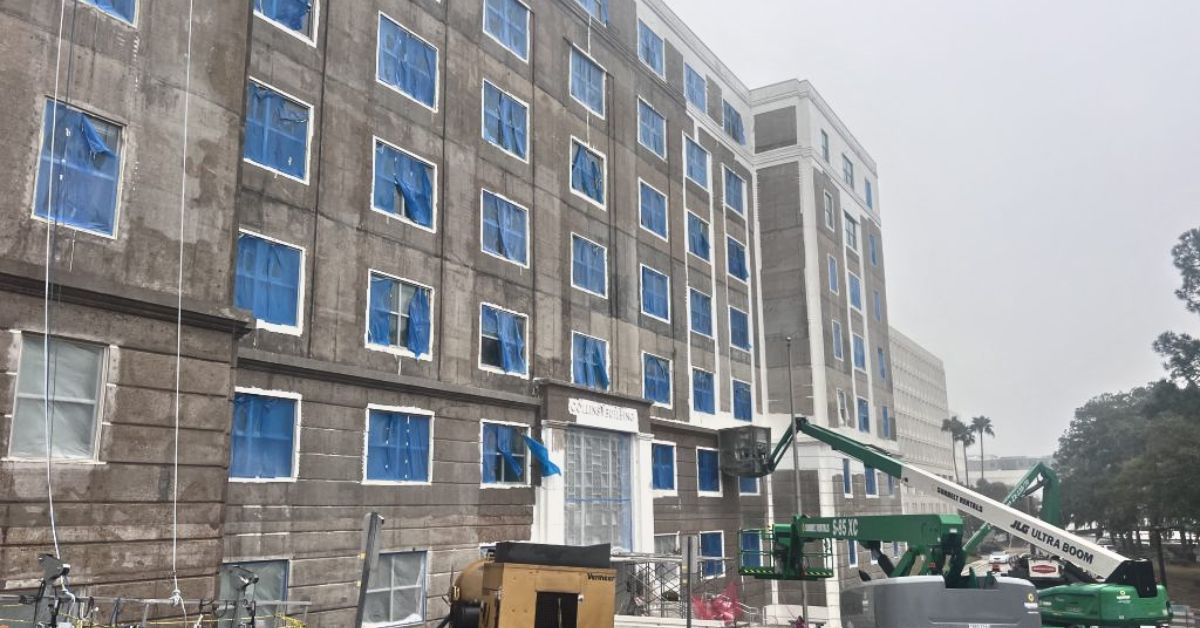
Stucco and concrete are only as strong as their weakest point, and variables like weather, time, and care cause weaknesses in these substrates to appear making preventative care a critical element to longevity of structures. Preventive care relies on proper surface preparation. Industrial coatings and paints fail and weaken over time. Applying new coatings over damaged surfaces leads to premature failure because they hide issues in the stucco or concrete without solving them. Waterblasting allows for the total removal of the old material which creates a clean, bondable surface to promote strong adhesion for new coatings, overlay, or concrete which extends the life of the new system while protecting the integrity of the structure.
Surface Preparation
Waterblasting removes old paint and degraded coatings down to the bare substrate. This process creates a clean profile that promotes strong adhesion for new layers while also exposing spalling and cracks which may be occurring in the substrate. Cracks and spalling are constant threats to structures because they allow water to enter the concrete and rust the structural steel. Leaving old coatings and painting over them can cause the water to become trapped and increase the damage to the substrate over time. Hydroblasting effectively eliminates these issues by exposing the bare substrate without altering the metal’s structure, halting corrosion and preserving the asset’s integrity.
Cleaning and Maintenance
Debris accumulation in machinery can cause overheating and mechanical failure. Regular cleaning with waterblasting clears sludge and grime from critical moving parts, preventing blockages. This method can clean complex equipment without disassembly, reaching into crevices that manual tools can’t. This efficiency minimizes downtime during scheduled maintenance.
Infrastructure Preservation
Bridges and public structures are constantly attacked by environmental elements like extreme weather, road salts, and pollutants. Hydroblasting these structures to remove the old coatings and overlay allows for them to be resurfaced and can reveal potential structural issues for early repair. Hydroblasting also does not cause reverberation or dust like saw cutting, grinding, jackhammering, or sandblasting meaning that the existing structural steel remains sound and there is less environmental risks from dust inhalation.
Industry-Specific Examples
Different sectors use waterblasting to address unique maintenance challenges. The versatility of the equipment allows it to adapt to various industrial environments.
Manufacturing Applications
Manufacturing plants deal with buildup of material in equipment like evaporators and heat exchangers. Waterblasting removes this buildup surfaces to prevent equipment damage and safety risks without using chemicals. Clean equipment operates more smoothly and increases productivity.
Construction and Surface Prep
The construction industry uses hydroblasting for surface preparation in various stages from new construction to demolition. Hydroblasting is used in new construction to help remove concrete which may not have properly cured in the slab or shell; it is used in renovations to prepare surfaces by stripping old coatings from floors and walls from high-rise condos and homes to warehouses and storage facilities. Hydroblasting is often used as part of preventative care and maintenance; for example, managers in water treatment plants, use it to remove old tank linings before applying new protective barriers, ensuring the necessary concrete surface profile for health and safety standards.
Commercial and Mill Operations
In mills, hydroblasting restores the heat transfer efficiency of components like evaporators and heat exchangers by clearing fouling from mineral deposits. A decrease in efficiency drives up energy costs, so regular cleaning restores units to peak performance. It is also used to clear clogged ash lines in power generation facilities and clean cooling towers and heat exchangers to restore their cooling capacity.
Benefits of Using Commercial Waterblasting
 Benefits of Using Commercial Waterblasting
Facility managers choose waterblasting for its distinct advantages over other cleaning methods, including environmental responsibility and operational efficiency.
Environmentally Friendly
Waterblasting reduces the need for chemical cleaning agents. Unlike traditional solvents that pose disposal challenges and deteriorate concrete and metals over time, hydroblasting uses water, eliminating toxic runoff and increasing the longevity of the substrate or equipment. The process also generates minimal waste compared to abrasive blasting, which leaves behind tons of spent media; further, the used water and removed material can be removed through vacuum recovery and refiltered for use. This reduction in hazardous waste simplifies regulatory compliance.
Cost-Effective
Preventive maintenance lowers operational expenses and risk of catastrophic failure. It is far cheaper to maintain equipment than to replace it; going further, proper preventative maintenance of homes, condos, roads, and bridges prevents the exponential costs to repair these structures and can save lives Extending the life of capital assets improves the return on investment and creates safer long-term use. The speed of hydroblasting also reduces labor costs and minimizes production downtime, saving money.
Efficiency and Speed
The power of high-pressure water works much faster than mechanical abrasion, stripping paint and rust in as little as a single pass. The liquid medium can also flow around complex shapes, allowing preparation around hard-to-reach areas that manual methods often miss. This allows a small, efficient team to outperform a large manual labor crew.
Choosing the Right Waterblasting Service
Selecting a qualified provider is crucial for a successful project. Not all concrete, painting, or pressure washing companies have the capability for industrial hydroblasting because this industrial service requires the skill of hydroblasters. Hydroblasters may be called “pressure cleaners” but pressure cleaners are not hydroblasters; a hydroblasting technician must have knowledge of all forms of waterblasting as well as the ability and skill to operate the equipment, from pressure cleaning to UHP.
Licensing and Certification
A reputable provider will hold all necessary business licenses and certifications relevant to hydroblasting. Hydroblasting technicians and operators should have the requisite training for high-pressure water jetting from experience and organizations such as the WaterJet Technology Association.
Experience and References
Experience in industrial environments is non-negotiable. The contractor should have a history of working with technical equipment. Ask for case studies and contact references from past clients to verify their reliability and quality of work.
Ensuring Long-Term Value
Commercial waterblasting secures the longevity of industrial assets by shifting from reactive repairs to a proactive maintenance strategy. This stabilizes budgets and increases predictability. The benefits go beyond cleanliness; it preserves structural integrity and ensures systems function at design specifications. This reliability is the foundation of a productive and safe industrial operation.
Contact Us for Professional Service
Protect your industrial assets with expert care. Clean Sweep Hydroblasting provides top-tier commercial waterblasting services tailored to your facility’s needs. Our experienced team handles everything from technical mill cleaning to surface preparation to concrete remediation.
Now that you understand commercial waterblasting’s role in preventive care, don’t wait for equipment or structural failure. Contact Clean Sweep Hydroblasting today to schedule a consultation and let us help you optimize your preventative maintenance program.