How you prepare your industrial recoating projects sets them up for success or failure. Surface preparation sets the foundation for adhesion, film performance, and long-term durability, especially in environments that face difficult conditions like moisture, chemicals, abrasion, and temperature swings.
In industrial settings, recoating work often involves steel, concrete, tanks, piping, process equipment, and structural components that already carry contamination or deteriorated coatings. If you’re approaching these materials for surface preparation, learn how to do so properly before recoating.
What Surface Preparation Actually Does
Surface preparation removes the materials that prevent a coating from bonding to the substrate. That includes failing paint, corrosion, scale, salts, oils, chemical residue, and embedded contaminants that remain after years of service.
Recoating over those materials creates a weak interface between the substrate and the new coating system. Even a high-performance coating will struggle if contamination stays in place or if the surface profile does not match the coating specification.
A proper preparation process also creates consistency across the work area. Uniform conditions help coating crews apply the system at the correct thickness and achieve predictable curing and performance.
Why Adhesion Depends on Preparation
Adhesion starts with direct contact between the coating and a clean, properly prepared surface. If residue sits between the substrate and the coating, the bond breaks down faster under stress.
Poor preparation often leads to early coating failure at localized points. Those failures usually start around rust pockets, edges, welds, joints, pits, and areas where old coating remained in place.
Industrial facilities cannot afford that kind of breakdown. A coating system that lifts, blisters, or delaminates ahead of schedule drives up maintenance costs, disrupts operations, and shortens the life of the asset.
Hidden Contaminants Cause Expensive Problems
Visible debris is only part of the problem. Many surfaces hold soluble salts, oils, process residue, and fine particulate contamination that coating crews may not see during a quick inspection.
Those contaminants can trigger osmotic blistering, underfilm corrosion, and adhesion loss after the recoating project appears complete. The surface may look ready, but the coating can still fail if prep crews do not remove what remains below the surface or within the surface profile.
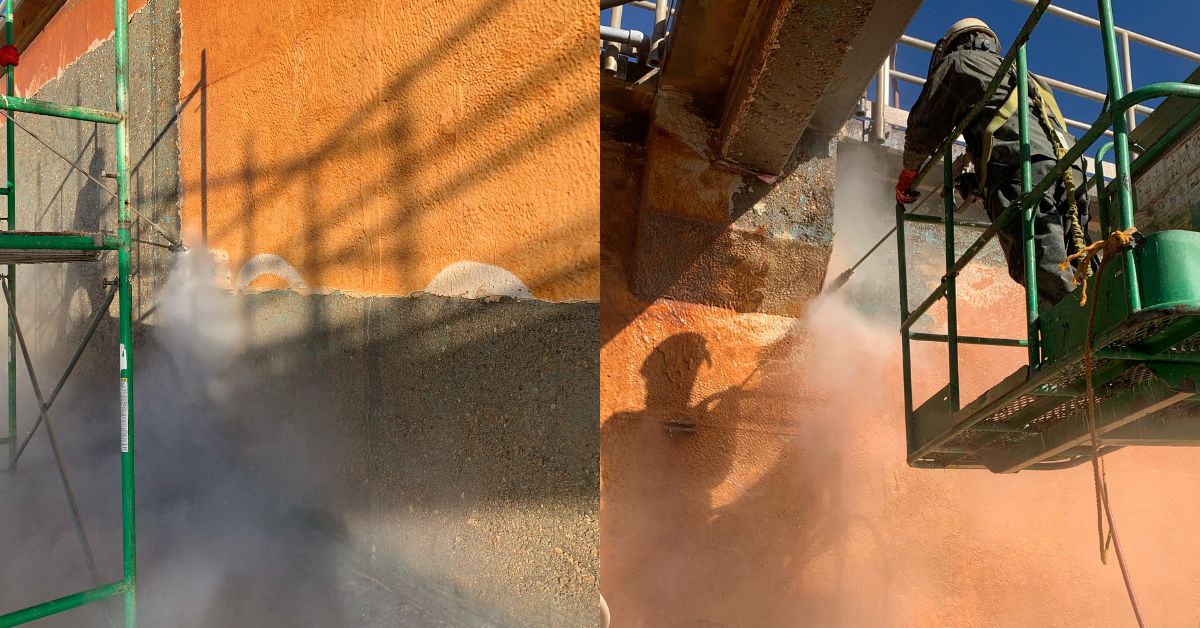
This is where method selection matters. Mechanical cleaning can leave contaminants behind or spread them across the substrate, while properly executed water blasting can remove coating, corrosion products, and contamination without introducing abrasive media into the work zone.
 Recoating Requires More Than Coating Removal
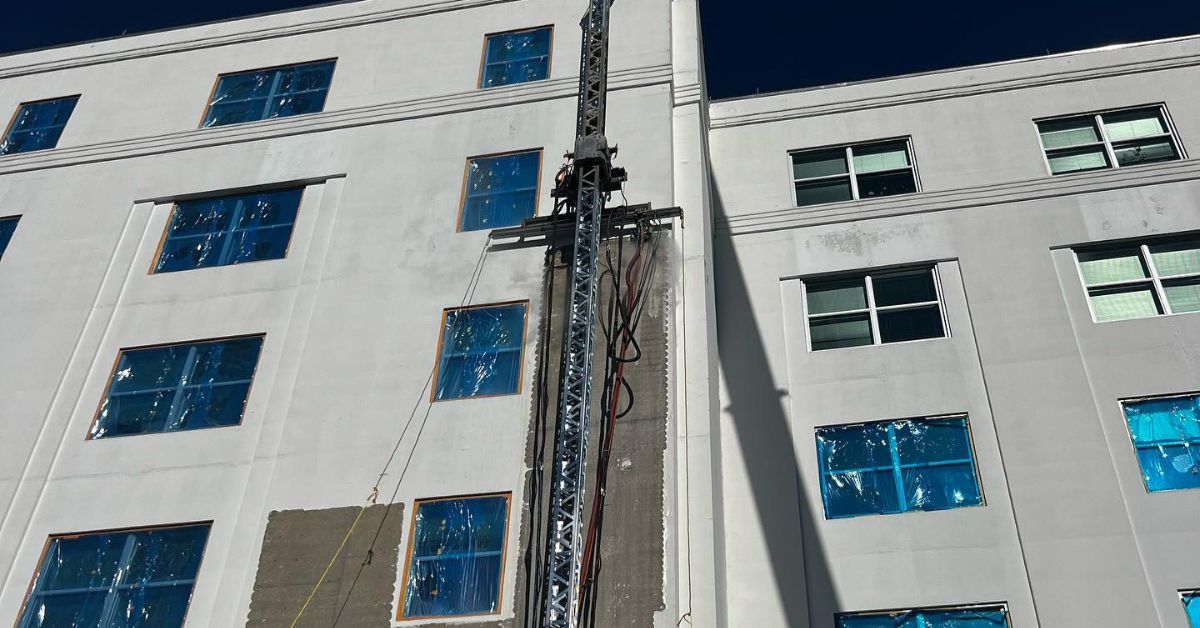 Recoating Requires More Than Coating Removal
Many projects focus too heavily on stripping old material and not enough on preparing the substrate for the next coating layer. Surface preparation is not just demolition of the previous coating system. It is a controlled process that restores the surface to the condition required by the specification.
That condition includes cleanliness, soundness, and profile. It also includes attention to corners, edges, weld seams, anchors, penetrations, and transitions where coating failures often begin.
The Cost of Inadequate Surface Preparation
Improper preparation creates problems later. Coatings can appear sound during turnover, then fail prematurely once the asset returns to service.
Common consequences include:
- Reduced coating adhesion
- Premature blistering and peeling
- Accelerated corrosion under the film
- Increased rework and shutdown costs
For contractors, poor prep can also create disputes over coating performance. For facility owners, it can shorten maintenance cycles and increase total lifecycle cost.
Surface Profile Still Matters
A clean surface alone does not guarantee coating success. The coating manufacturer and project specification often require a specific surface profile so the coating can anchor correctly.
If the profile is too smooth, the coating may not grip the surface well enough. If the profile is too aggressive, the coating may not fully cover peak areas, which can leave the system vulnerable to early breakdown.
That is why preparation crews need more than production capacity. They need technical control over the method, pressure, stand-off distance, tooling, and inspection process.
Different Substrates Need Different Prep Strategies
Recoating projects vary widely depending on substrate type and service environment. Carbon steel, stainless steel, concrete, marine structures, tanks, and industrial floors all present different preparation challenges.
Concrete surfaces may require removal of weak surface layers, contaminants, curing compounds, or previous coatings before a new system can bond. Steel structures often require removal of rust, scale, chlorides, and compromised coating at welds and edges.
A one-size-fits-all approach creates risk on both types of projects. Effective prep crews evaluate the substrate, existing coating condition, contamination level, and performance requirements before choosing the method.
Surface Preparation Supports Safety and Environmental Goals
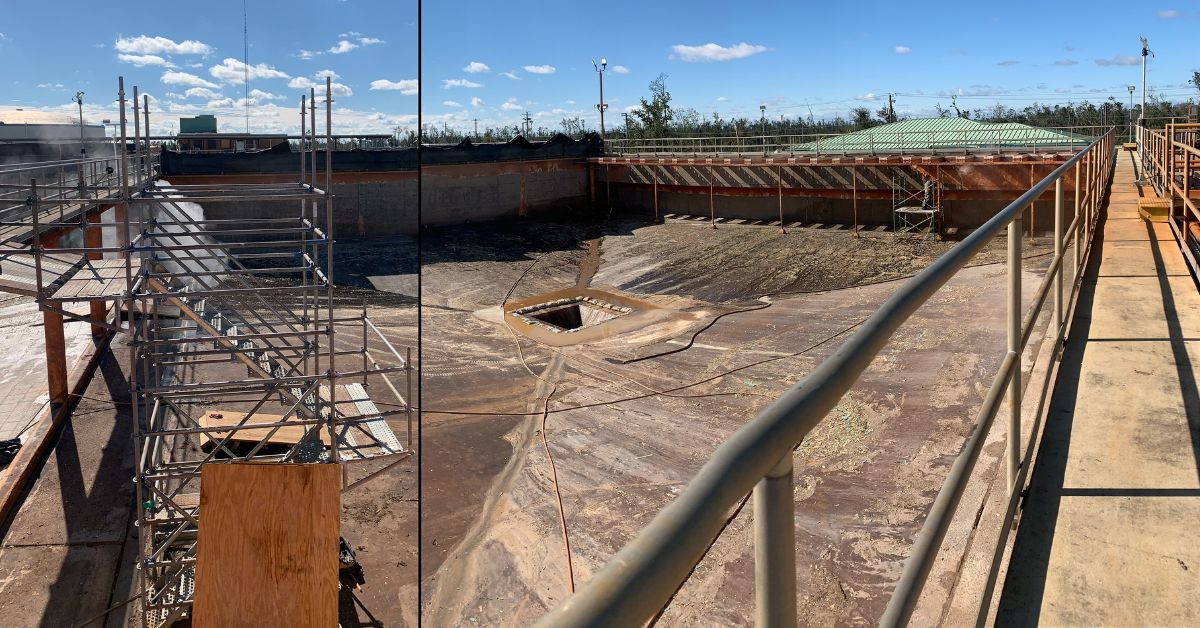 Surface Preparation Supports Safety and Environmental Goals
Preparation method affects more than coating performance. It also affects jobsite safety, containment planning, waste handling, and environmental impact.
Water blasting offers advantages on projects where dust control and media management matter. It can reduce secondary waste streams associated with abrasive blasting and support a cleaner work area around active industrial operations.
That matters for facilities that need controlled execution around sensitive equipment or operational zones. It also matters for contractors who need efficient cleanup and compliance planning during shutdown work.
Clean Sweep Hydroblasting promotes safe execution with environmentally friendly water blasting methods, which supports industrial projects that require both performance and control.
Preparation Quality Affects the Entire Coating System
A coating system performs as a whole, but every layer depends on the first point of contact with the substrate. Primer, intermediate coat, and topcoat all rely on the quality of preparation beneath them.
If the surface holds contamination or loose material, the full system becomes vulnerable. Even the best coating product cannot compensate for a weak surface condition.
Why Experience Matters Before Recoating
Industrial recoating projects often involve tight schedules, complex access, and demanding service conditions. Surface preparation crews need to understand coating requirements, substrate behavior, water blasting performance, and jobsite safety at the same time.
That level of execution comes from field experience and the ability to adapt equipment and methods to the application. Clean Sweep Hydroblasting brings more than 30 years of combined hydroblasting industry experience and focuses on innovative, effective, and safe solutions for specialized projects. Clean Sweep Hydroblasting specializes in surface preparation services, serving project managers, contractors, and industrial facilities across national and international markets.
Proper surface preparation is critical before recoating because it determines whether the new system bonds, protects, and performs as intended. In industrial environments, that preparation must remove contamination, address deteriorated material, and create the right surface condition for the specified coating system.
Don’t write off surface preparation services as a minor step in the recoating process. When experience matters, call Clean Sweep Hydroblasting to support industrial recoating projects with precise, safe, and effective hydroblasting solutions built for demanding conditions.