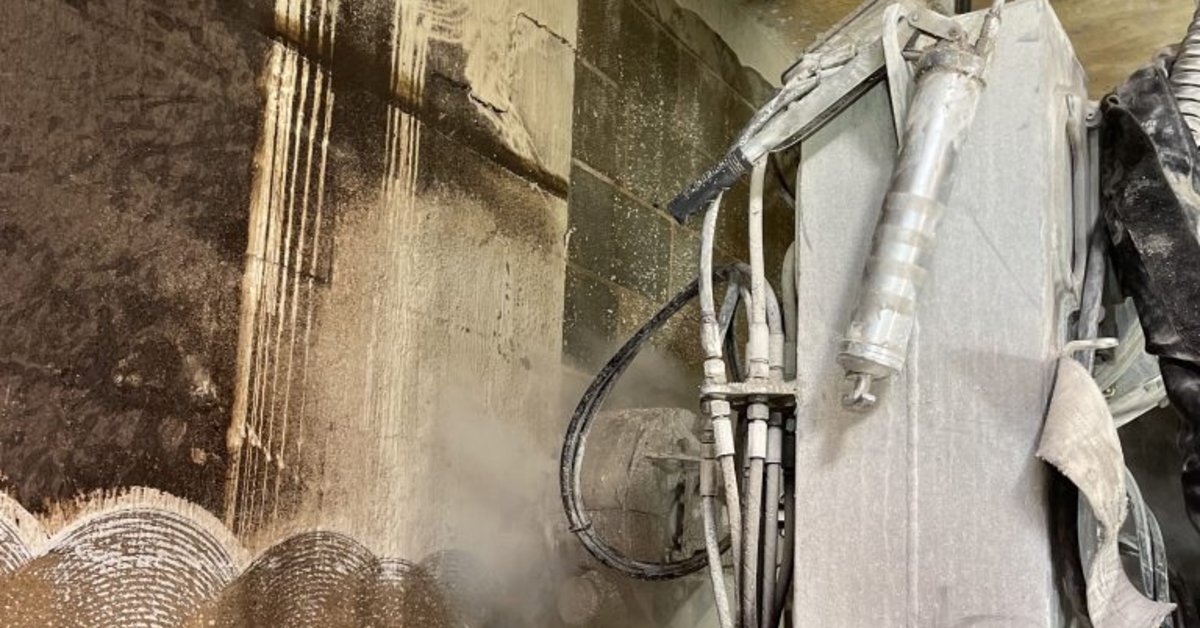
Industrial cleaning and surface preparation projects require equipment that will not compromise the underlying surface. The right water pressure level depends on the substrate’s condition, the bond of the deposit or coating, and the desired results for the surface profile.
High-pressure hydroblasting and ultra-high-pressure (UHP) blasting both rely on concentrated water jets, but they serve distinct purposes. If you select the wrong method, you either leave bonded material behind or damage the substrate you need to protect. Here’s how UHP blasting and high-pressure hydroblasting compare and how to decide which one belongs on your scope.
High-Pressure Hydroblasting
High-pressure hydroblasting uses concentrated streams of pressurized water to remove materials such as residue, scale, coatings, stucco, and loose material from industrial surfaces. Industry classifications place high-pressure water cleaning between 5,000 and 10,000 pounds per square inch (PSI) and high-pressure waterjetting between 10,000 and 30,000 PSI. The force dislodges deposits that conventional cleaning methods can’t match. The water penetrates cracks in accumulated material, breaks its attachment to the surface, and carries away loosened debris.
Pressure is only part of the equation. Water flow determines how much material the system carries away, and nozzle configuration controls the direction and concentration of the jet. Operators adjust these settings according to the surface condition, the material to be removed, and the desired profile on the cleaned substrate. The result is effective cleaning without applying more force than the job demands.
Industrial Cleaning Applications
Manufacturing processes, fluid circulation, and routine equipment operation leave residue behind. As deposits collect inside pipelines and processing equipment, they restrict flow and drag down efficiency. High-pressure hydroblasting breaks apart these accumulations and flushes the loosened material out, resolving the issues while restoring access to surfaces that require inspection or maintenance.
Common applications include cleaning boiler tubes, heat exchangers, storage tanks, and drainage lines. Mineral deposits inside heat exchanger tubes interfere with heat transfer and restrict fluid circulation. Pressurized water driven through the tubes removes the accumulated deposits without the use of aggressive chemical cleaning agents.
Coating Removal Capabilities
Industrial coatings break down from chemical exposure, moisture, and mechanical wear. Once a coating begins to separate from the substrate, the coating will fail. High-pressure water jets lift the compromised material away.
Intact protective coatings are a different problem. Their adhesion resists the water jet’s force. For heavily bonded coatings, ultra-high-pressure equipment and UHP blasting are the right tools.
Ultra-High-Pressure Hydroblasting (UHP Blasting)
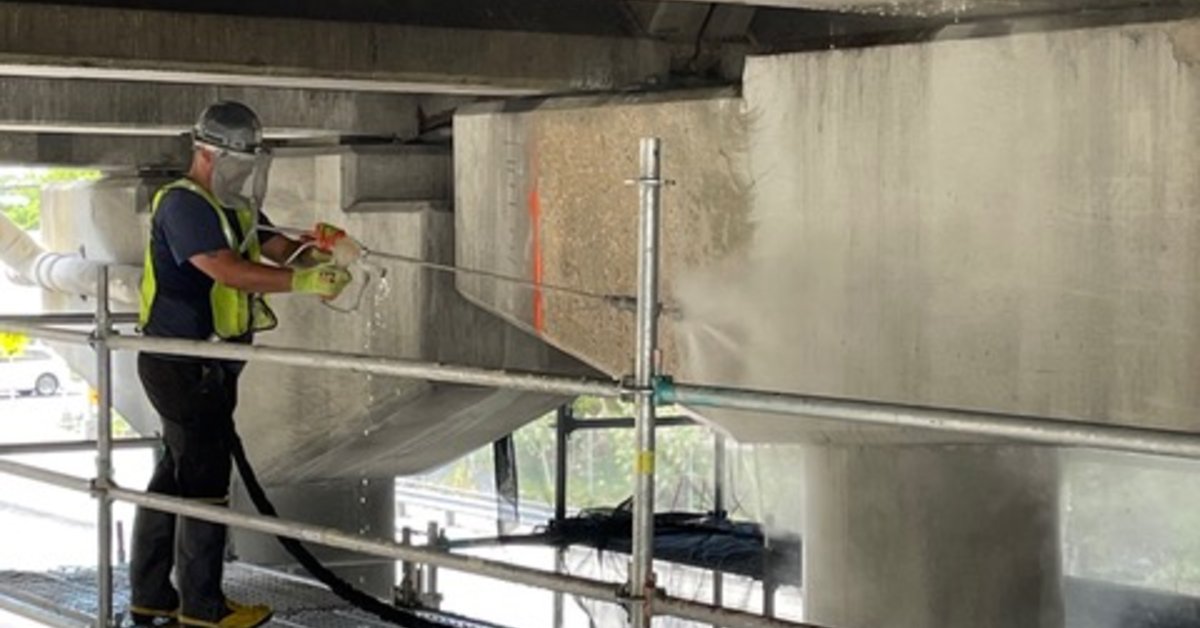
Ultra-high-pressure hydroblasting (UHP blasting) starts at roughly 25,000 to 30,000 PSI, depending on the standard you follow. The UK’s Water Jetting Association sets the threshold at 1,700 bar (about 25,000 PSI), while the NACE/SSPC waterjetting classifications draw the line at 30,000 PSI (210 MPa).
Industrial UHP systems commonly run between 28,000 and 42,000 PSI, and Clean Sweep’s UHP work runs up to 40,000 PSI. Specialized pumps deliver water through precision nozzles, producing concentrated jets that break substantial material bonds. That impact energy allows UHP equipment to remove deposits and coatings that resist conventional high-pressure cleaning.
For all that force, UHP blasting requires no chemical stripping agents and no abrasive blasting media. Operators control the pressure, nozzle movement, and exposure duration to achieve the specified removal requirements. Equipment selection still matters because excessive waterjet energy in the wrong place damages the substrate beneath the material.
Coating Removal Capabilities
Strong industrial coatings protect steel structures, storage tanks, and concrete surfaces from demanding service conditions. That same adhesion makes them hard to remove when facilities prepare surfaces for maintenance or recoating. UHP blasting drives concentrated water against the coating, creating stresses that fracture the material and break its bond with the underlying substrate.
The method is at its best on thick protective coatings and multiple layers of aged paint. As the water jet passes across the surface, compromised material separates, exposing areas that need additional work. Operators adjust the traverse speed and pressure to take down stubborn sections without overexposing the substrate.
Surface Preparation Results
A coating system is only as good as the surface under it. Contaminants left behind interfere with adhesion and set up premature coating failure. UHP blasting removes residual coating material, corrosion products, and surface contaminants—including soluble salts that dry abrasive methods can leave trapped in the profile—and exposes the underlying material.
On steel, UHP reveals the existing surface profile instead of cutting a new abrasive-style profile into the metal. The joint NACE/SSPC standard states that waterjet cleaning “does not establish but may reveal an existing surface profile.” Confirm that the profile meets the coating manufacturer’s specifications and name the required cleanliness grade (WJ-1 through WJ-4) before work starts.
Concrete preparation works differently. Controlled waterjetting removes weakened surface material and exposes sound concrete with a texture that can be matched to the specified ICRI concrete surface profile (CSP). For more detail, see how hydroblasting meets ICRI, SSPC, and NACE prep standards.
Concrete Removal Applications
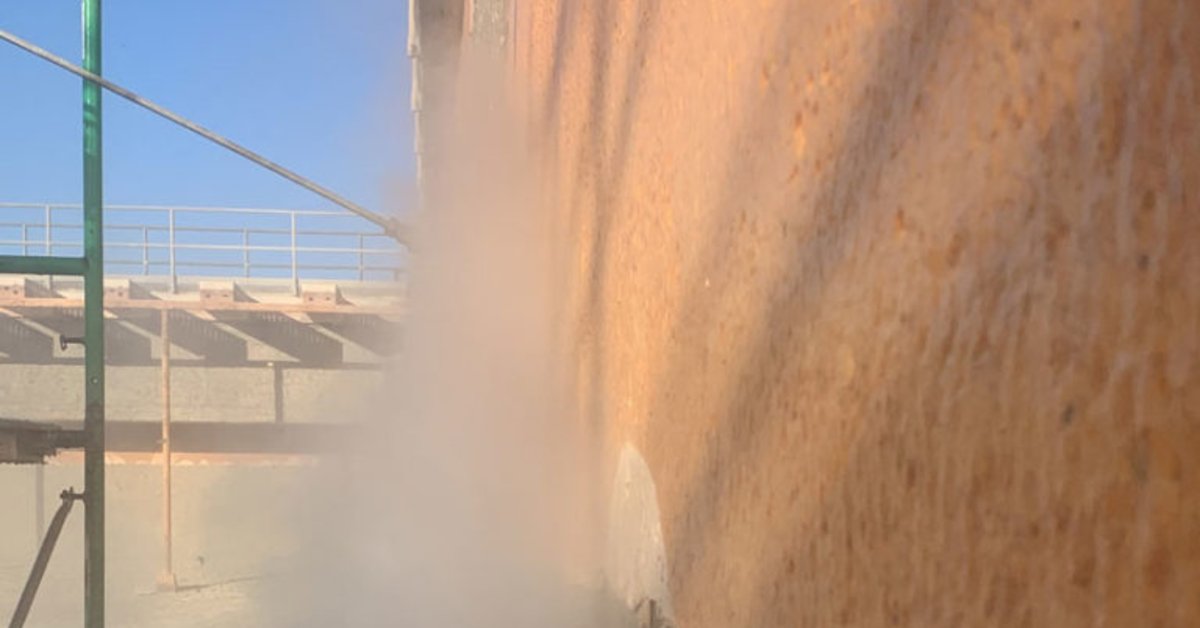
Concrete rehabilitation projects often require crews to remove deteriorated material while preserving structural components. Hydrodemolition directs concentrated water into the concrete, exploits weaknesses within the material, and breaks apart deteriorated sections while leaving reinforcing steel in place and undamaged.
Unlike jackhammers and other impact methods, the American Concrete Institute states that hydrodemolition does not induce microcracking in the concrete that remains. The roughened surface it leaves improves bond with the repair material.
Removal depth depends on the equipment configuration, water flow, nozzle movement, and condition of the concrete. Robotic hydrodemolition systems provide controlled coverage across large work areas and reach specified removal depths. That control is why engineers specify hydrodemolition for bridge decks, parking structures, dams, and other concrete surfaces and structures that require selective removal before repairs.
Equipment and Operational Requirements
Both methods rely on high-output pumps, pressure-rated hoses, and nozzles that direct pressurized water toward the work surface. Their operating demands differ sharply by pressure level and application. Every component in the line has to have the appropriate rating for the job so that the system delivers the required force and water volume from start to finish.
Pressure and Water Flow
Pressure, measured in pounds per square inch (PSI), determines the intensity of the jet’s impact, while flow rate (GPM) sets the amount of water available to remove and transport loosened material. A high-flow system suits heavy accumulations of soft deposits, whereas concentrated UHP jets take on strongly bonded coatings.
Maximum pressure alone doesn’t guarantee effective removal, so evaluate both. We break down the numbers further so that individuals can gain a better understanding of PSI and GPM in hydroblasting as well as learn how flow rate and pressure work together.
Nozzle Selection
Nozzles and jewels control how pressure reaches the target surface. A concentrated straight jet delivers heavy impact energy to a localized area, making it suitable for stubborn coatings and hydrodemolition. Rotating nozzles and heads create configurations to distribute the energy across a broader path, providing consistent removal on large surfaces.
Operational Safety
Any high-pressure jet can cut and inject, even when equipment operates well below UHP levels. An injection injury can look like a minor cut and still require immediate medical treatment.
Safe work produces safer infrastructure. Every job starts with a Job Hazard Analysis (JHA), a controlled work zone, inspected pressurized components, and protective equipment rated for the operation. UHP systems add stricter demands on hose integrity, nozzle control, and emergency shutdown procedures. The WJTA-IMCA Industry Best Practices for the Use of High Pressure Waterjetting Equipment sets the baseline for training, equipment, and procedures.
Choosing Between High-Pressure and UHP Blasting
Pressure selection starts with the substrate and the material coming off it. Steel equipment with accumulated residue typically responds well to conventional high-pressure cleaning, whereas firmly bonded protective coatings could require UHP blasting. The condition of the underlying surface matters too, because damaged or deteriorated materials react differently to concentrated waterjet force.
Ultimately, choosing between high-pressure hydroblsating and UHP blasting comes down to balancing removal effectiveness against substrate protection. A qualified contractor evaluates these conditions and runs a test area when the spec calls for one before setting operating parameters. The method should fit the project requirements, not the biggest pump on the truck.
Bring Your Scope to Clean Sweep Hydroblasting
The right pressure comes from reading the material, the substrate, and the spec, then building the equipment configuration to match. Clean Sweep Hydroblasting brings nearly 40 years of hydroblasting experience to industrial cleaning, surface preparation, hydrodemolition, and specialized UHP blasting projects.
Clean Sweep’s innovative, experienced team evaluates every project’s needs, down to the equipment. If the equipment your job requires doesn’t exist, we will build it.
Are you planning an industrial cleaning, surface preparation, or concrete removal project? Bring us your scope, and we’ll tell you exactly what it takes. Reach out to Clean Sweep Hydroblasting today for additional information.